Inside a $110B Round (Yes, We Snuck In) (March ‘26)
Note from the Founders 👋
The Girl Math of Alternatives: Late Stage Investing 🏦
Deal Spotlight: Girl Beer 🍻 👯
Investor Resource: The New Moats in AI 🤖
Media & Press: Morning Brew, HBS, and Wharton ☕🤓
What’s Coming Up: Events & Other Happenings 🎊
Note from the Founders 👋
GM ☕ from Serena, Porter, and Emma, the co-founders of Girl Math Capital! This is how your email finds us today… Porter is coming down from the SXSW insanity, Emma is still riding the high from speaking at a conference alongside one of our financial idols, Mrs. Dow Jones, and Serena is recovering from her third weather-related travel disruption-turned-all nighter in the past month. The Life of a Showgirl!
Girl Math has also been buzzing this month. We launched a new continued education series called “GMC Round Tables” where our members and friends of Girl Math lead discussions about financial and professional topics that are top of mind for our community. You can read more about this month’s topic in today’s investor resource👇 .
We’re also seeing some exciting momentum in our deal flow right now. We’ve doubled the number of SPVs we’ve run to date in the past month, and our members are writing the damn checks! We’ve also been building partnerships with an accelerator and a mission-aligned VC firm that we believe will further strengthen our deal flow.
Finally, we’ve been investing time in streamlining our operational workflows, which doesn’t sound sexy, but it actually makes our day-to-day much more productive. What this means in practice is Claude-ifying our operations on the back end to automate menial tasks and free up more of our time to focus on human touch where it matters.
Maybe it’s the spring weather, maybe it’s the extra hour of sunlight, maybe it’s the fact that Vanderbilt is in March Madness, but if you can’t tell, we’re feeling GOOD over at Girl Math. Hope you’re feeling it too. Happy reading!
The Girl Math of Alternatives: Late Stage Investing 🏦
Read time: 6 minutes
This past month, we had the opportunity to run an SPV into OpenAI’s $110 billion late-stage financing round.
Of course, there are a lot of considerations on the investment thesis alone. Will OpenAI continue to dominate consumer AI usage while Anthropic pulls ahead in enterprise? Are the ChatGPT to Claude switches we’ve been seeing a sign of a true shift in dominance in the AI race? What are the implications of Altman’s deal with the Pentagon? Is the deal overvalued or a once-in-a-generation opportunity to get in before a potential IPO?
Our goal at Girl Math Capital is to give our members the tools to form their own opinions on questions like these through our angel curriculum, which features investors from firms like Imaginary Ventures, Bain Capital Ventures, and Slauson & Co. Today, however, we want to zoom out from the company to the opportunity as a whole. This round introduced something new to many of us at Girl Math: late-stage private investing.
Until recently, the vast majority of our deal flow has been pre-seed through Series A. This SPV was our first time collectively evaluating a much later-stage pre-IPO opportunity. We learned a lot on the fly, so let’s break down our biggest considerations.
Access & Ownership
The first question: are you buying primary or secondary shares?
Primary shares → your capital goes directly into the company (typically part of a new financing round)
Secondary shares → you’re buying existing shares from another shareholder (early employee, investor, etc.), and the company doesn’t receive your capital
In this case, these were primary shares, so we were investing alongside lead investors and directly funding the company’s next phase of growth. However, many late-stage opportunities are secondary, where you’re not funding the business, but rather providing liquidity to someone else. That someone might be an early employee looking to cash out or an investor reallocating capital.
This distinction matters because you need to know what you’re underwriting: is it conviction in the company’s future, or conviction in the price you’re getting today?
The second question is understanding how you’re getting access.
Unlike early-stage deals, where you might have direct or community-led access to the founder, late-stage opportunities are almost always intermediated through a GP, fund, or syndicate, which means your diligence has two layers:
The company
The person or entity giving you access
At a minimum, you’ll want to get comfortable with whether the allocation is secured and where the shares are coming from. In highly competitive deals, there have been real cases of misrepresented or unclear access (i.e. groups claiming allocation they don’t actually have, or layering in ways that make ownership murky).
Our bottom line here is before you get excited about what you’re investing in, make sure you understand how you’re getting in and what you actually own, plus the price you’re paying for it, which brings us to consideration #2.
2. Fee Structure
In late-stage deals, fees are often the price of access. GPs and funds know that investing in companies like OpenAI, Anthropic, and SpaceX are highly sought after, and they price their access accordingly in the form of upfront fees. These can vary from 2-10% upfront, depending on whether the access is direct or relationship-driven versus highly intermediated and competitive.
Then there are the SPV fees. In this case, we were running an SPV into another SPV, which meant platform fees at both layers, making total fees higher than what we’d typically see on an early-stage deal.
Fees are a normal part of investing through an SPV, but they tend to increase in hotter, later-stage deals. As they go up, they directly impact your net return, so it’s important to factor them into your exit assumptions.
3. Exit Dynamics
For early-stage deals, exit timelines are aspirational at best. Founders will assume a 5-7 year horizon, name-drop a few potential acquirers, and the rest is speculation. That's the deal you're signing up for, and the potential 100x return is the reward for sitting on that uncertainty. By contrast, OpenAI has raised $160-$170 billion to date and is actively preparing for an IPO. You're not betting on if there will be an exit, but when and at what valuation.
A few things worth pressing on before you wire:
- Lock-up period → Post-IPO, you typically can't sell immediately. The standard is 180 days, meaning even after the company goes public, you can’t sell your shares for another six months.
- Share delivery → Understand exactly how and when you receive your shares. It’s important to confirm that share delivery at IPO is clearly documented, especially in layered SPV structures.
- Your return thesis → Unlike early-stage investing, where we're underwriting massive, uncertain upside, here you're making a more defined bet. Does the company 2x from your entry by IPO? 3x? The math is more legible, which is both the comfort and the constraint of later-stage deals.
The Bottom Line
Late-stage investing doesn't ask you to believe in a vision like angel investing does. It asks you to evaluate a price, requiring both discipline and judgement.
Access, fees, and exit dynamics all stack up: you might love the company, but if you're layered into a costly SPV structure with a 180-day lock-up and a valuation that leaves limited room to run, the risk-reward may not shake out the way you'd hope.
We view late-stage as one piece of a broader strategy. Early-stage deals give you high-risk, high-upside exposure. Late-stage gives you lower-risk, near-term potential liquidity, and honestly, the chance to say you were in before the IPO. Both have a place in a thoughtful portfolio.
At Girl Math Capital, our goal is to make sure you have the frameworks to evaluate both types of opportunities.
Deal Spotlight: Hurray’s Girl Beer 🍻
ICYMI: Each month, we’ll share a few of the deals our community has backed, not to give investment advice, but to show you the breadth of opportunities Girl Math members are exploring and spotlight some epic founders.
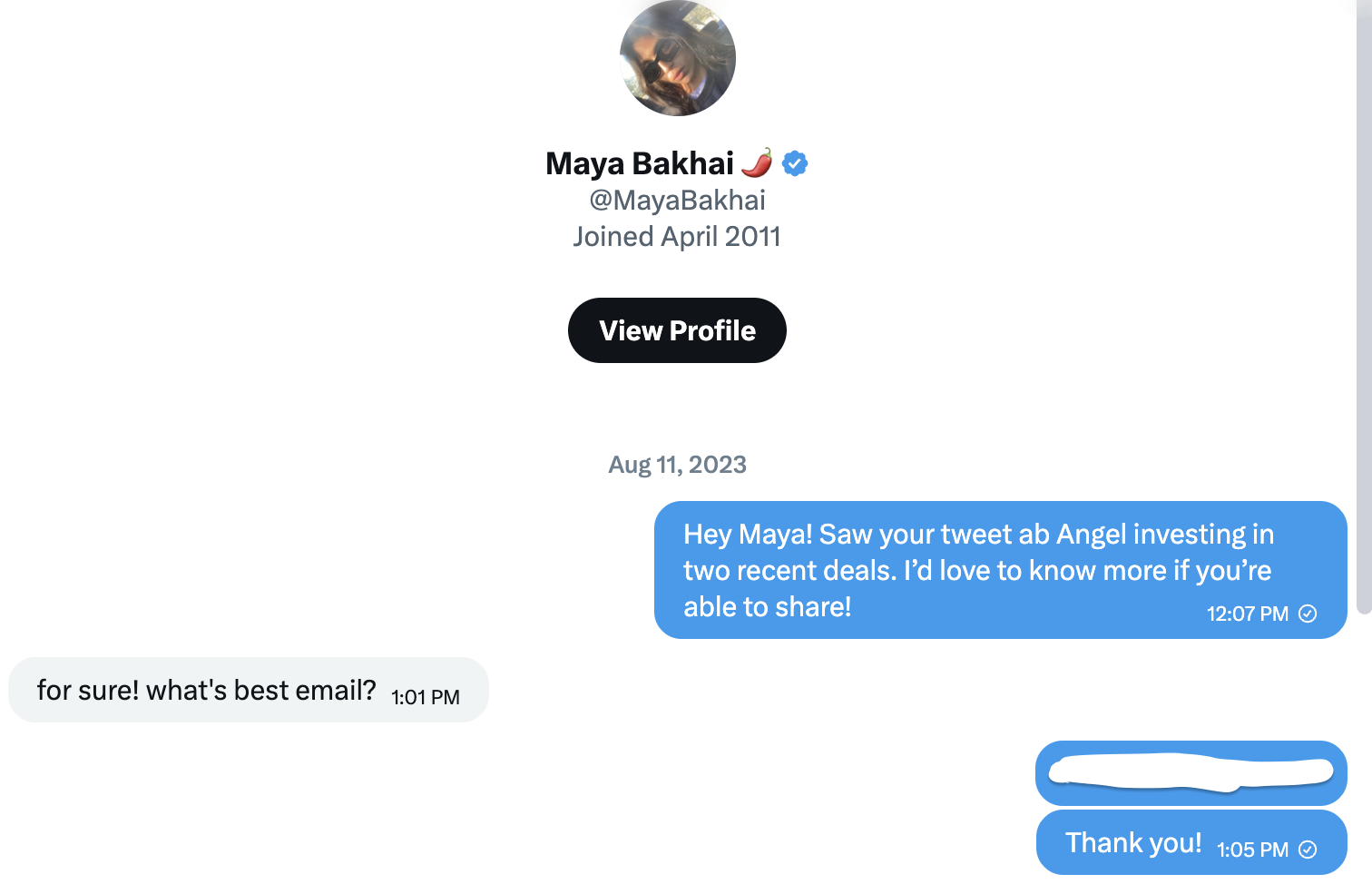
Porter here! In August 2023, Maya Bakhai, founder and GP of Spice Capital, put out a tweet saying she had two strong female founders who were fundraising and she wanted to connect them to more female angels. I had never met Maya and had only made one previous angel investment, but I shot my shot anyway, and it led to one of my favorite investments to date.
For those who aren’t familiar with the brand, Hurray’s Girl Beer is actually exactly what it sounds like - beer made by girls, for everyone. While Girl Beer is disrupting the light beer market with it’s fresh flavors (pineapple yuzu, blueberry lavender, passionfruit orange), what sold me on investing was the conviction I felt in the founder Ray. I wouldn’t want to bet against her, and when you’re the fundraising for pre-product, that’s basically the biggest factor in the game.
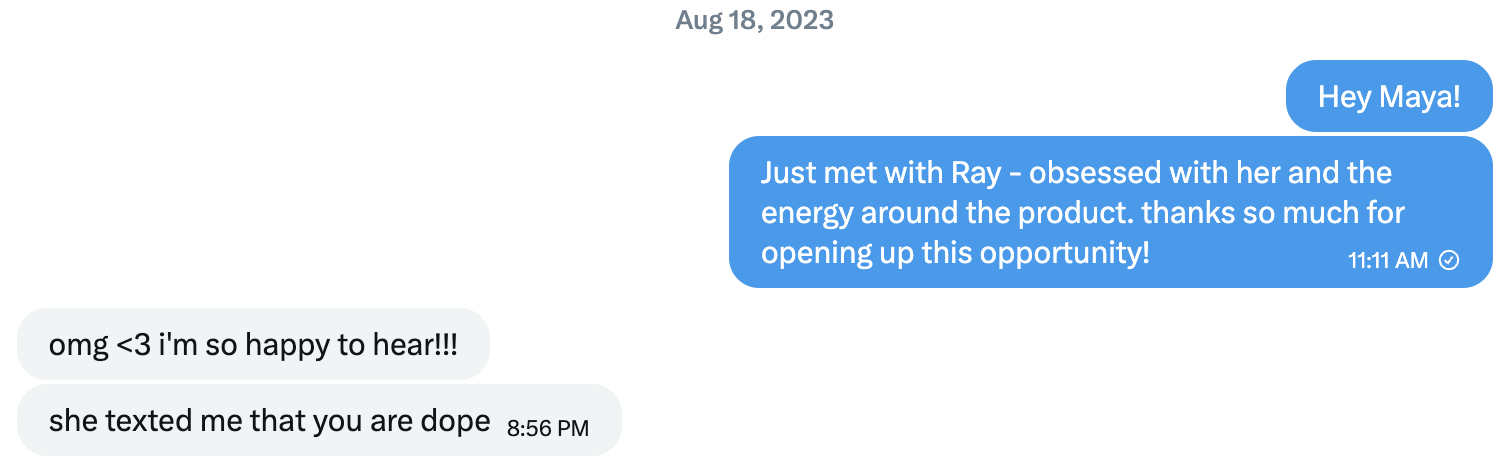
The experience of investing in Girl Beer’s pre-seed round honestly contributed to my confidence to start building Girl Math alongside Serena and Emma later that year. Connecting with Ray showed me a side of angel investing I hadn’t yet seen, one where founder relationships can become meaningful friendships.
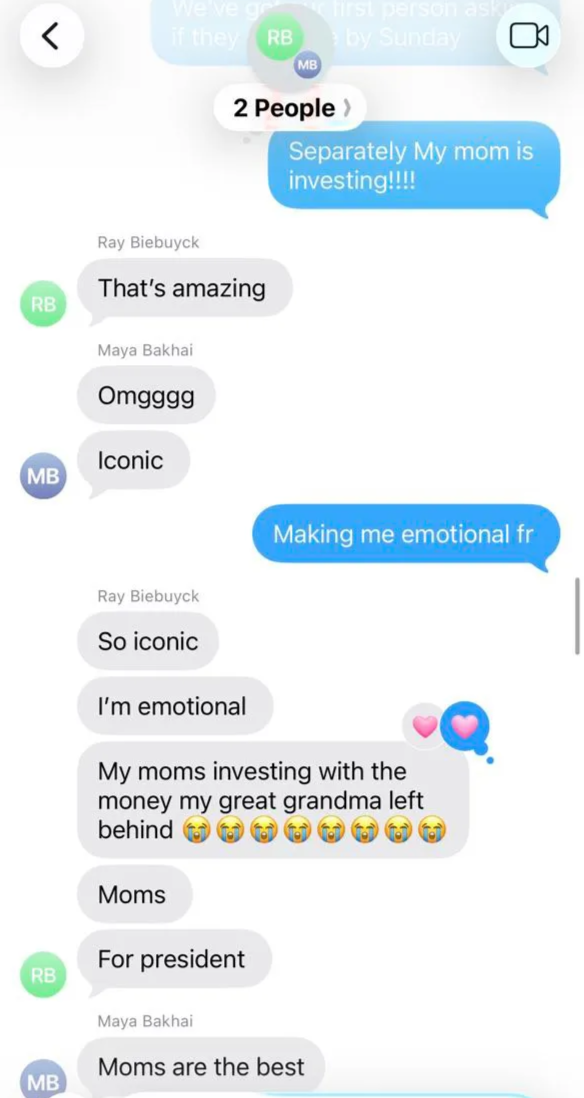
The best part of the story for me is that this past August, exactly two years later, Girl Beer kicked off a seed raise and brought the deal to our Girl Math Capital community. Not only did many of our members participate, but it was the first angel investment my own mom made 🥹.
Now, we are so pumped to share that Girl Beer just announced their $5M Seed round led by Lakehouse Ventures, alongside major retail expansion this spring with Walmart, Kroger, Albertsons Companies, HEB, and more. You can read more about the raise and rollout, plus get a taste for the unique flavor that Girl Beer brings to the table on PR Newswire here. Cheers 🍻 !
- Porter
Investor Resource ✏️
The New Moats in AI 🤖
from Girl Math Capital’s first Round Table Discussion leader, Sabina Smith, Investor at Scale Venture Partners
When everyone is building on the same foundational models, the obvious question becomes: what actually makes a company defensible when considering an investment? Sabina walked us through how she thinks about company moats in the age of AI, and why the old rules still apply, just in new forms.
The classic moats (network effects, economies of scale, brand loyalty, deep tech) haven't gone away. But a few newer ones have become especially important to look for:
High switching costs. How much have you given to the platform that you can't take back? A coding agent that knows exactly how you work, or a note-taking app that becomes your system of record, is hard to leave even if a competitor looks shinier.
Deep workflow integration. The best AI companies don't just do a task well; instead, they embed themselves into how people actually work day-to-day. The more a product lives inside a workflow, the harder it is to rip out.
Proprietary data access. Does the company have access to data that no one else can replicate? That asymmetry compounds over time.
Counterposition. Sometimes the best moat is that the incumbent simply isn't motivated to compete with you because doing so would cannibalize their own business model.
For more tips like this, consider joining our next cohort!
Media & Press: Morning Brew, HBS, and Wharton ☕🤓
We have been booked and busy this month!
First up, Emma took the stage at Morning Brew's Eyes on Her: Women, Wealth, and What's Next in New York City on March 18th, and we could not be prouder. She joined Liz Faircloth, co-founder of The Real Estate InvestHER, and Kavita Datta, Managing Director of Private Capital Advisory at Raymond James, to shed light on alternative assets as part of a broader portfolio strategy. Before the event, she caught up with Morning Brew editor Mark Reeth for a story about community-driven brands, portfolio diversification, and the Great Wealth transfer. And she did it all while rocking the chicest vintage outfit she rented from a Girl Math portfolio company, Isle of Monday 💅🏼
Read the full interview here and watch the event playback here (coming soon!) 🗞️ 📺
Next, Porter flew to Boston to speak to Harvard Business School's Women in Investing club about how we built GMC from the ground up and got our start in angel investing. All three of us planned to be there, but ironically, Porter, the only one not based on the East Coast, was the only one whose flight wasn't cancelled by the snowpocalypse that week 😂 She repped us beautifully regardless, and we're beyond thankful she braved the New England winter weather to give GMC our Elle Woods moment.
Finally, Serena pitched GMC at Wharton's Venture Lab pitch competition, our very first pitch competition as a company! The pitch competition was focused on gender-based businesses, and we loved seeing so many GMC members supporting us in the audience 💌
And now it's time to nap.
What’s Coming Up: Events & Other Happenings 🎊
It never stops for GMC! This month, we’re getting excited about hosting our first event at Pop Up Grocer (supposed to be last month, but postponed due to aforementioned snowpocalypse), an in-person Pitch and Shop with one of the hottest home goods stores in NYC, and an amazing founder/funder mixer with an organization tied to our alma matter (anchor TF down!). We’re also wrapping up our Angel unit for Cohort 3, and moving on to our Real Estate unit! Get ready for some fun investor tips in a new asset class next month.
Lastly, follow us on LinkedIn, Instagram, or TikTok so you don’t miss a thing.
Closing Note 💌
Girl Math Capital was born from the frustration that deals were shared in some circles and not in others. This newsletter is one more way to make sure those conversations and opportunities reach more people, and in particular, more women. If you know someone who’d love this newsletter, pass it along. We believe alternative investing isn’t just for finance and tech bros - it’s for women who want to get smart, build community, and build generational wealth. See you next month 💸💅
The Girl Math Team
If this got you curious, submit your information to join our next cohort, or apply to be a community member here.